Read to Someone gives students meaningful opportunities to read aloud, listen, build fluency, and strengthen comprehension with a partner. These questions can help you establish partnerships, choose books, manage voice levels, and support successful independent practice.
Partners
How do I partner students for Read to Someone?
When you first launch Read to Someone, you may choose partners so students can focus on learning the routines of successful partner reading. Once those routines are established, teach students how to choose a partner and gradually release that decision to them.
Do partners need to have the same reading ability?
No. Read to Someone does not require ability-matched partners. Students are practicing reading, listening, fluency, and comprehension together. The routines you teach help partners support one another even when they are reading different kinds of books.
Should I intentionally pair a stronger reader with a developing reader?
Choose partnerships based on what will support successful, engaged reading rather than assigning one student to be another student's tutor. Both students are readers and both should have opportunities to read, listen, think, and practice.
Can students choose their own partners?
Yes. Partner choice can be gradually released once students understand what makes a successful Read to Someone partnership. Teach the decision explicitly so students learn to choose someone with whom they can stay engaged and learn successfully.
What if two students aren't successful together?
Coach the partnership just as you would coach another independence behavior. Revisit the Read to Someone I-chart, identify what needs strengthening, and practice the expected behavior. When needed, help students choose or work with a different partner.
Books and Reading
What books do students read during Read to Someone?
Students can use the books already available to them for independent reading. The goal is authentic reading practice, so choose a system that gives partners quick access to books and allows them to get started independently.
Do partners need to read the same book?
No. Partners can read from one book or bring two different books. Teach both options so students know how to manage whichever approach they choose.
How do partners read one book together?
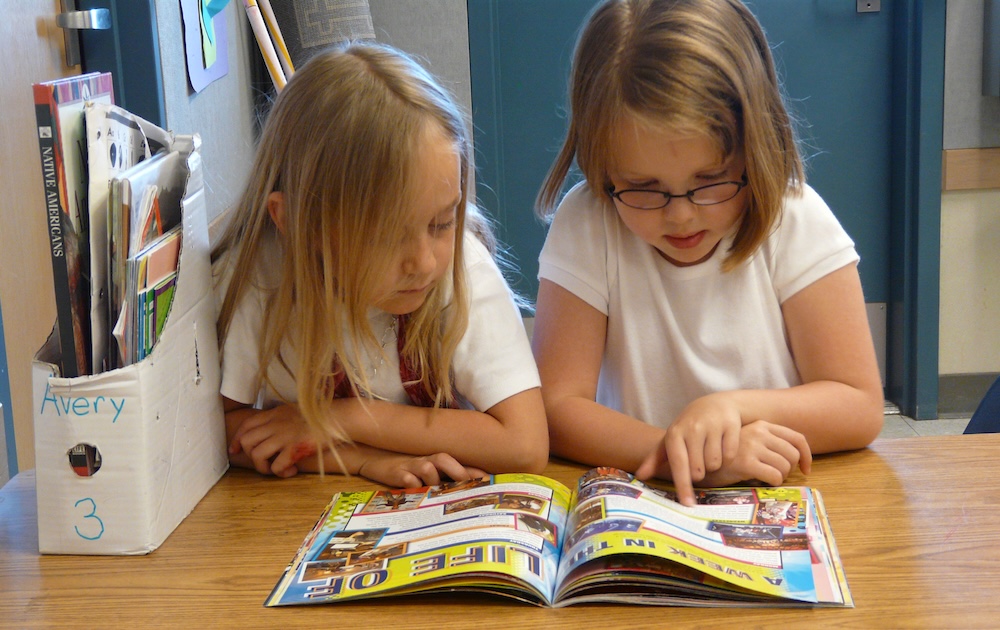
When partners share one book, they sit EEKK—elbow to elbow, knee to knee—so both students can see the text. They can take turns reading while the other partner follows along and listens for understanding.
How do partners read when they each have a different book?
Students take turns. One partner reads from their book while the other listens and checks for understanding. Then they switch roles and continue with the other partner's book.
Who goes first?
Teach students a simple way to decide so this small decision doesn't interrupt their reading. Partners can quickly agree who will begin and then alternate turns. The important behavior is getting started right away.
What if partners have very different reading abilities?
Each student can read from a book that is appropriate for them. When partners use two books, each student reads their own text while the other listens. This allows students with different reading abilities to participate successfully together.
Should students take turns by page, paragraph, or another amount?
The amount can vary based on students, texts, and reading development. Teach a simple turn-taking routine that allows both partners to spend meaningful time reading and listening without making the switching itself the focus.
Reading Together Successfully
What does Ready, Sit, Read mean?
Ready, Sit, Read gives partners a simple routine for getting started. Ready: have books and materials ready. Sit: settle into an EEKK position where both partners can see the text. Read: begin reading and listening right away.
What is EEKK?
EEKK stands for elbow to elbow, knee to knee. It gives partners a simple way to sit close enough to see the book, hear one another, and read together at a quiet voice level.
How do students know whether their partner understands what they read?
Teach Check for Understanding with a Partner. After reading, the listening partner checks that they understand what was read. This gives the listener an active job and keeps comprehension at the center of partner reading.
What should a student do when their partner gets stuck on a word?
Teach Coaching or Time? The reader decides whether they want coaching or simply need a little more time. If they ask for coaching, the partner can use the reading strategies you have explicitly taught rather than immediately supplying the word.
How do I keep one student from doing all the helping?
Keep both roles clear. Read to Someone is a partnership between two readers, rather than one student serving as the teacher. Students take turns reading and listening, and coaching happens only when the reader asks for it.
Voice Level and Engagement
How do I keep the noise level down during Read to Someone?
Teach and model the expected voice level before asking students to manage it independently. EEKK helps because partners are close enough to hear one another without raising their voices. Practice the appropriate volume and include it on your Read to Someone I-chart.
What if the room gets louder as more students choose Read to Someone?
Use Review & Reflect to help students notice the effect of voice level on everyone's learning. Revisit and model the expected voice level when needed, then give students another opportunity to practice it successfully.
How do I keep partners on task?
Explicitly teach each part of the routine before expecting students to manage it independently. Students should know how to get started, sit together, take turns, listen, Check for Understanding, respond when a partner needs help, and persevere for the whole round.
How do I know students are actually reading when I'm conferring with someone else?
Independence is built through explicit teaching, practice, observation, and reflection. During the launch, observe closely before shifting more of your attention to Responsive Teaching. As students become independent, brief observations, conferences, and Review & Reflect help you continue monitoring engagement and learning.
Should I walk around and monitor partners during Read to Someone?
During the launch, observe carefully so you can determine whether students are ready for greater independence. As the routines become established, gradually shift your attention toward Responsive Teaching while continuing to notice and respond to students who need support.
What if one pair loses engagement while everyone else is successful?
Allow successfully engaged students to continue and respond to the individual partnership. Confer briefly, identify the behavior that needs support, and help the partners make a plan for a more successful round.
What if several partnerships lose engagement?
Use the Quiet Signal to bring students back together. Review & Reflect, revisit the relevant I-chart behavior, model again if needed, and provide another opportunity to practice successfully.
Launching and Adding Read to Someone to Choice
When should I launch Read to Someone?
Launch Read to Someone after students have established Read to Self and Work on Writing and have begun using Daily 5 Check-In. Teach the Read to Someone Foundation Lessons first so students have the routines they need to work successfully with a partner.
Why are there more Foundation Lessons for Read to Someone?
Partner reading adds another layer of independence. Students need to manage their own behavior while also navigating a partner, shared space, turn-taking, listening, comprehension, voice level, and what to do when someone needs help.
Does the whole class need to practice Read to Someone at the same time?
Use whole-group modeling to teach the routines, then provide enough successful practice for students to understand and manage the task. As Read to Someone becomes part of Daily 5 choice, you can have smaller numbers of students participating at one time.
When can I add Read to Someone to Daily 5 Check-In?
Add Read to Someone after students have learned the Foundation Lessons, launched the task with the 10 Steps, and demonstrated that they can manage partner reading successfully. It then becomes another available choice during Independent Practice.
Does every student need to practice Read to Someone before it becomes a regular choice?
Make sure every student has an opportunity to learn and successfully practice the task before expecting them to choose it independently. You can continue introducing it to a few students at a time while others work within familiar Daily 5 choices.
Does Read to Someone need to happen every day?
Read to Someone becomes one of the choices available for authentic literacy practice. Unlike Read to Self and Work on Writing, every student does not need to choose Read to Someone every day.
How do I know when Read to Someone is successfully launched?
Look for partners who can get started, settle into a successful learning space, read and listen for the whole round, use the partner routines you've taught, maintain an appropriate voice level, and remain engaged without depending on the teacher.
Does Read to Someone need to be perfect before I launch Listen to Reading?
Look for a strong enough foundation that students can manage Read to Someone successfully during Independent Practice. Continue coaching and strengthening the routine as needed while you begin teaching the Foundation Lessons for Listen to Reading.
What if Read to Someone becomes less successful later in the year?
Return to explicit teaching. Revisit the purpose and I-chart, reteach a Foundation Lesson that needs strengthening, model the expected behavior, and give students another opportunity to practice successfully.