Schools have spent years debating which curriculum to adopt. What they have spent far less time on is the question underneath that one: what does a teacher need to know and be able to do for any curriculum to succeed?
That is the question Daily 5 and CAFE were always answering.
What Daily 5 and CAFE Were, From the Beginning
Daily 5 and CAFE grew out of real classroom problems. How do you structure a classroom so that students can work independently and productively while you confer with individual readers? How do you build the conditions that allow teaching to happen?
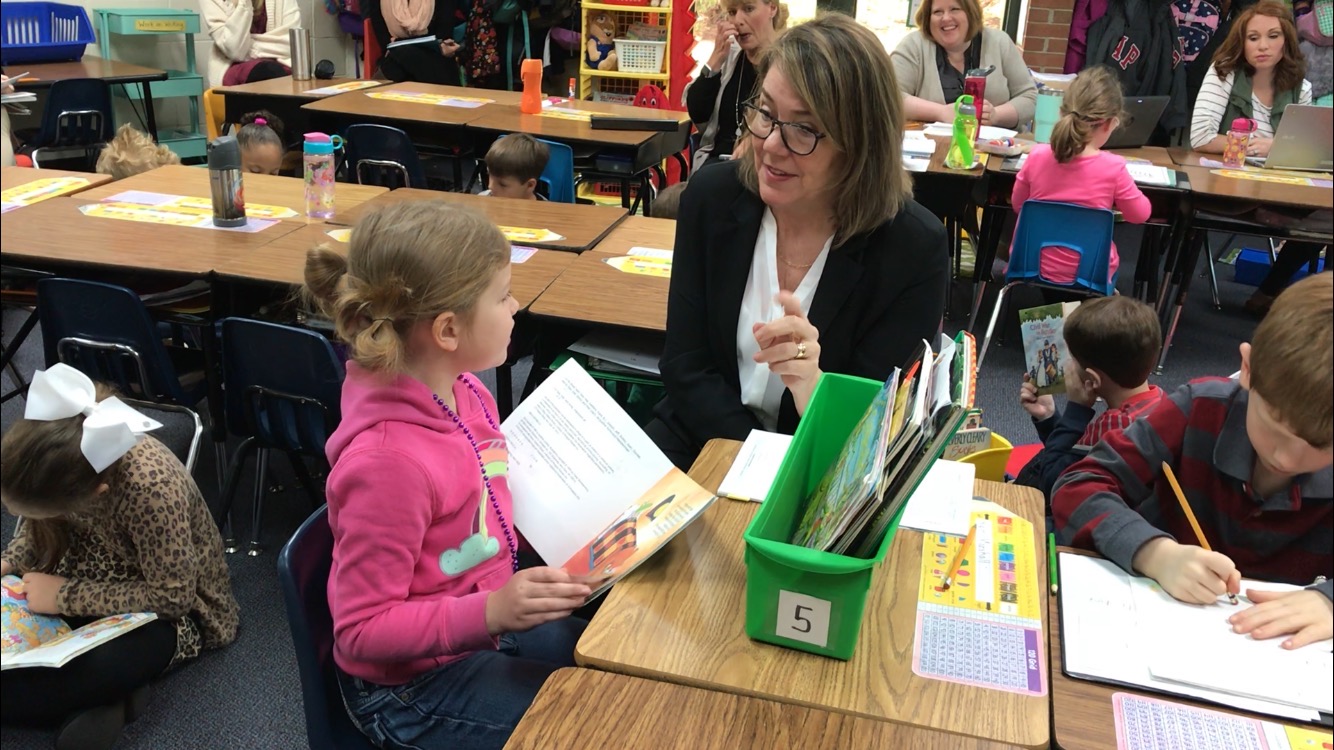
Daily 5 gave teachers that structure. It organized how students spend their independent practice time (Read to Self, Read to Someone, Listen to Reading, Work on Writing, Word Work) so teachers could confer with individuals and teach small groups while the class worked with genuine independence.
CAFE went deeper. It gave teachers a complete framework for teaching itself: how to assess students and use that assessment to drive instruction; how to design lessons that are research-based and brain-compatible; how to teach across whole group, small group, and one-on-one settings; a lesson framework consistent enough to use in every setting; how to track what was taught and look for patterns so instruction could be responsive to the students in front of you; and the shared language of reading skills and strategies that teachers and students could use together.
These frameworks were built on research. Hundreds of studies. Articles on motivation, independence, classroom environment, student-teacher relationships, deliberate practice, and the science of how the brain learns. Everything we could find, tested in real classrooms with real students.
The practices worked. Teachers across the country adopted them. Students became more independent, more engaged, more capable. The evidence was in the classrooms.
Then came the Science of Reading conversation. And somewhere in that conversation, a claim began to circulate: Daily 5 is misaligned with Science of Reading.
I want to address that directly.
What the Criticism Got Wrong
Daily 5 is a classroom structure. It organizes how students spend their independent practice time and how teachers use that time to confer and teach small groups. It has never been a reading philosophy, a curriculum, or a set of beliefs about how children learn to decode print.
CAFE is a teaching framework. It describes how to assess, plan, teach across settings, track learning, and respond to students. It has never been a mandate about which reading strategies to use or which curriculum to follow.
The criticism that emerged confused what Daily 5 and CAFE are with what some teachers were doing during that time. Those are two different things.
A teacher can use Daily 5 structures with any reading curriculum, including structured literacy curricula. The structure does not dictate the content. It creates the conditions for the content to be taught well. CAFE's lesson framework works in phonics instruction, in fluency practice, in comprehension work, in any instructional setting, with any approach.
Teachers who loved Daily 5 and CAFE knew this. They kept using them because they worked, and they kept working alongside every curriculum they were given.
What Hattie Named
In 2009, John Hattie published Visible Learning, a synthesis of more than 800 meta-analyses examining the factors that most influence student achievement, representing the learning of over 300 million students. It is the largest synthesis of educational research ever conducted.
When I read Hattie's work, something became unmistakable. The practices at the heart of Daily 5 and CAFE: relationships, environment, routines, independent learning, collaborative learning, conferring, brief and effective lessons, progress monitoring, authentic application. These were precisely the practices Hattie's research identified as high-impact.
We had built the right practices. We had the right instincts, the right research base for our time, and the right results in classrooms. Hattie gave us the explicit, comprehensive research language to name what had always been true.
The Evolution: Prepared Classroom and The Teaching Practice
Prepared Classroom (Boushey & Behne, 2024, Routledge) was the next step in that recognition. It took the practices at the heart of Daily 5 and CAFE, named them explicitly as eight high-impact teaching practices, aligned each one to Hattie's research, and expanded them beyond literacy to teaching across the full day and every subject.
The lesson framework CAFE introduced, consistent across whole group, small group, and conferring, became The Lesson Framework, one of the eight high-impact practices. The conferring structures, the attention to environment and relationships and routines, the commitment to purposeful independent practice: all of it was now named, researched, and applicable to every teacher in every discipline.
The Teaching Practice is the professional learning system that grew from that work. Eight video courses, one for each high-impact practice, teach teachers exactly what each practice looks like in action, why the research supports it, and how to develop it in their own classroom.
The eight courses are:
- Building Trust and Belonging in the Classroom — Relationships
- Designing a Purposeful Learning Environment — Environment
- Reset Your Daily Routines — Routines
- Independent Practice in Action — Independent and Collaborative Learning
- The Art of Responsive Conferring — Conferring
- The Lesson Framework — Brief and Effective Lessons
- Guiding Student-Led Accountability — Progress Monitoring and Accountability
- Designing Meaningful Independent Practice — Authentic Application
These are the same practices Daily 5 and CAFE were built on. The research is now explicit, comprehensive, and named. And the scope has expanded to reach every teacher, in every subject, at every grade level.
For Teachers Who Need to Make the Case
If you use Daily 5, if you value The Teaching Practice, and if you have been asked to justify that choice in a Science of Reading context, here is what the research says:
Science of Reading tells us what to teach. It describes the content of effective literacy instruction: phonemic awareness, phonics, fluency, vocabulary, comprehension. That content is essential.
The Teaching Practice addresses something different and equally essential: the conditions under which that instruction reaches students. Relationships, environment, routines, independent practice structures, conferring, lesson design, progress monitoring, authentic application. These are the practices that determine whether any curriculum, including a structured literacy curriculum, actually works in a real classroom with real students.
These two things are complementary. A school can be fully committed to Science of Reading and fully committed to The Teaching Practice at the same time. In fact, the classrooms where Science of Reading instruction is working best are the ones where both are in place.
What Has Always Been True
Daily 5 and CAFE worked because they were grounded in research on how students learn and how classrooms function. Prepared Classroom made that research explicit. The Teaching Practice makes it teachable.
The conditions were always the answer. The research was always there.
Teachers knew this. The classrooms showed it. Hattie named it.
Learn more about The Teaching Practice. Explore the research behind each practice in Prepared Classroom (Boushey & Behne, 2024, Routledge).
References
Boushey, G., & Moser, J. (2006). The Daily 5: Fostering Literacy Independence in the Elementary Grades (1st ed.). Stenhouse.
Boushey, G., & Moser, J. (2009). The CAFE Book: Engaging All Students in Daily Literacy Assessment and Instruction (1st ed.). Stenhouse.
Boushey, G., & Moser, J. (2014). The Daily 5: Fostering Literacy Independence in the Elementary Grades (2nd ed.). Stenhouse.
Boushey, G., & Behne, A. (2019). The CAFE Book: Engaging All Students in Daily Literacy Assessment and Instruction (Expanded 2nd ed.). Stenhouse.
Boushey, G., & Behne, A. (2024). Prepared Classroom: Ready to Teach, Ready to Learn (1st ed.). Routledge. https://doi.org/10.4324/9781032682846
Hattie, J. (2009). Visible Learning: A synthesis of over 800 meta-analyses relating to achievement. Routledge.
Hattie, J. (2023). Visible Learning: The Sequel. A synthesis of over 2,100 meta-analyses relating to achievement. Routledge.