

By Gail Boushey Published: 7/7/2026 Updated: 7/10/2026
For most of my career, I've paid attention to patterns.
Not trends. Patterns.
I've worked in classrooms around the world, and I've learned that when the same questions begin surfacing in different schools, districts, and countries, it's worth paying attention. Those questions often signal that something is changing.
I think we're in one of those moments now.
For the past several years, much of the work in education has centered on selecting and implementing high-quality instructional materials. That work has been important, and it continues to be. Strong curriculum provides an essential foundation for teaching.
Lately, though, the conversations I'm having sound different. Teachers aren't asking me which program they should buy. They're asking how to make the program they already have work for the students sitting in front of them.
They're asking where conferring fits. How to respond when formative assessment shows students need another day. How to build independence. How to gather a small group without feeling like they're falling behind.
How to honor the curriculum while still responding to the learners sitting in front of them.
Those are different questions. I don't think they're isolated. I think they're pointing us toward the next shift in teaching.
One thing I've learned over the years is that classrooms often change before the profession has words to describe what's changing. Teachers begin asking different questions. School leaders notice new tensions. Researchers begin studying them. Eventually, the profession catches up.
I believe that's where we are today.
Research on implementation has consistently shown that curriculum alone does not determine student outcomes. Programs do not implement themselves. Outcomes are shaped by the professional decisions teachers make before, during, and after instruction.
Educational researchers call this professional noticing. It is the ability to recognize significant moments in student learning, interpret what those moments mean, and decide how to respond. I don't think teachers need another new term. I do think this one gives language to something skilled teachers have always done.
Professional noticing leads to professional judgment.
Professional judgment leads to responsive teaching.
Responsive teaching brings curriculum to life.
Looking back, I think one reason Daily 5 resonated with so many teachers is that it protected time for professional noticing. It created space to observe students, confer beside them, gather a small group when a common need emerged, and adjust instruction based on what students were showing us. As our work evolved through CAFE, Prepared Classroom, and now The Teaching Practice, that idea became even clearer. High-impact instructional practices are not separate from curriculum. They are the professional practices that help any curriculum succeed.
Recently, I've been encouraged to hear others asking similar questions. In her Curriculum Buyer's Remorse series, literacy researcher Rachael Gabriel reflects on some of the unintended consequences of placing so much emphasis on selecting high-quality instructional materials. She is not arguing against curriculum. She is inviting us to think more carefully about the relationship between curriculum and professional judgment.
The next shift in education will not be another program. It will be a renewed appreciation for the professional judgment teachers bring to every lesson. Schools will continue to invest in strong instructional materials, and they should.
At the same time, I believe we'll spend more time helping teachers develop the practices that make those materials effective. Professional noticing. Responsive teaching. Conferring. Small-group instruction. Independent practice. Formative assessment. These are not additions to a curriculum. They are the practices that help students engage with it, make sense of it, and transfer their learning.
The strongest classrooms I've visited around the world were never successful because a teacher simply followed a program.
They were successful because teachers noticed.
They listened.
They adjusted.
They responded.
The curriculum provided the foundation. The teacher brought the learning to life. That's the shift I'm predicting.
And if what I'm hearing in schools continues, I don't think we're very far away.
What decisions did you make this week because of what you noticed, not because of what was written in the lesson plan?
This article draws from research on teacher professional noticing, implementation fidelity, responsive teaching, and curriculum implementation.
Jacobs, V. R., Lamb, L. L. C., & Philipp, R. A. (2010). Professional Noticing of Children's Mathematical Thinking. Journal for Research in Mathematics Education, 41(2), 169–202.
Sherin, M. G., & van Es, E. A. (2009). Effects of Video Club Participation on Teachers' Professional Vision. Journal of Teacher Education, 60(1), 20–37.
Dusenbury, L., Brannigan, R., Falco, M., & Hansen, W. B. (2003). A Review of Research on Fidelity of Implementation: Implications for Drug Abuse Prevention in School Settings. Health Education Research, 18(2), 237–256.
Hill, H. C., & Erickson, A. (2021). Using Implementation Fidelity to Aid in Interpreting Program Impacts. EdWorkingPaper No. 21-414.
Lakin, J. M., & Rambo-Hernandez, K. E. (2019). Fidelity of Implementation: Understanding Why and When Programs Work. Gifted Child Today, 42(4), 186–191.
O'Donnell, C. L. (2008). Defining, Conceptualizing, and Measuring Fidelity of Implementation and Its Relationship to Outcomes in K–12 Curriculum Intervention Research. Review of Educational Research, 78(1), 33–84.
Cambourne, B. (1988). The Whole Story: Natural Learning and the Acquisition of Literacy in the Classroom.
Cambourne, B. (1995). Toward an Educationally Relevant Theory of Literacy Learning: Twenty Years of Inquiry. The Reading Teacher, 49(3), 182–190.
Gabriel, R. (2026). Curriculum Buyer's Remorse Parts 1–3.
Boushey, Gail. 2014. The Daily 5: Fostering Literacy Independence in the Elementary Grades. 2nd ed. Portland, ME: Stenhouse Publishers.
Boushey, Gail, and Behne. 2020. The CAFE Book: Engaging All Students in Daily Literacy Assessment and Instruction. Expanded 2nd ed. Portland, ME: Stenhouse Publishers.
Boushey, Gail, and Behne. 2024. Prepared Classroom: Ready to Teach, Ready to Learn. New York: Routledge.
Quick lessons you can teach in 10 mins/day so students take responsibility for their learning and rely on you less.
Get the LessonsTeaching is complex. And the challenges teachers are navigating right now are real.
Strong programs, new mandates, and growing expectations have changed what classrooms look like. Yet the foundations of effective teaching remain the same.
Students need to practice independently.
Teachers need time to respond to learners.
Learning needs structure to carry forward.
These are skills that can be built.
At Teach Daily, we focus on the structure of teaching. How lessons, independent practice, and responsive conferring work together across a day so learning lasts.
Choose your next move:
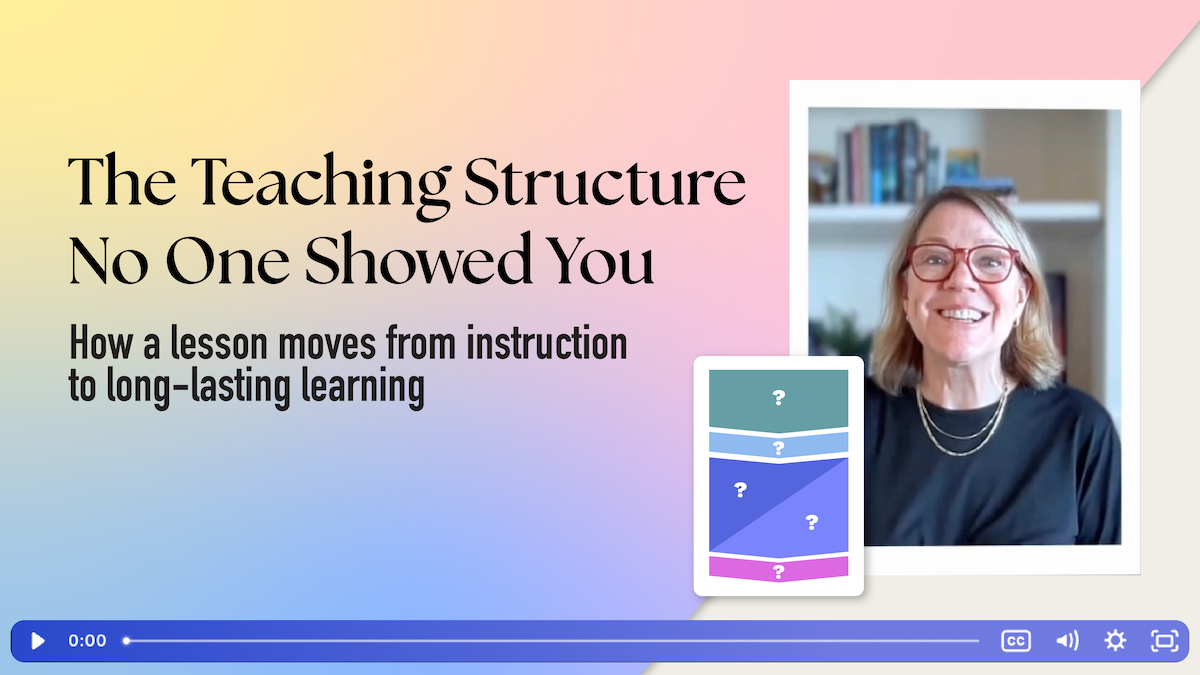
If you want to see the structure clearly, watch this training:
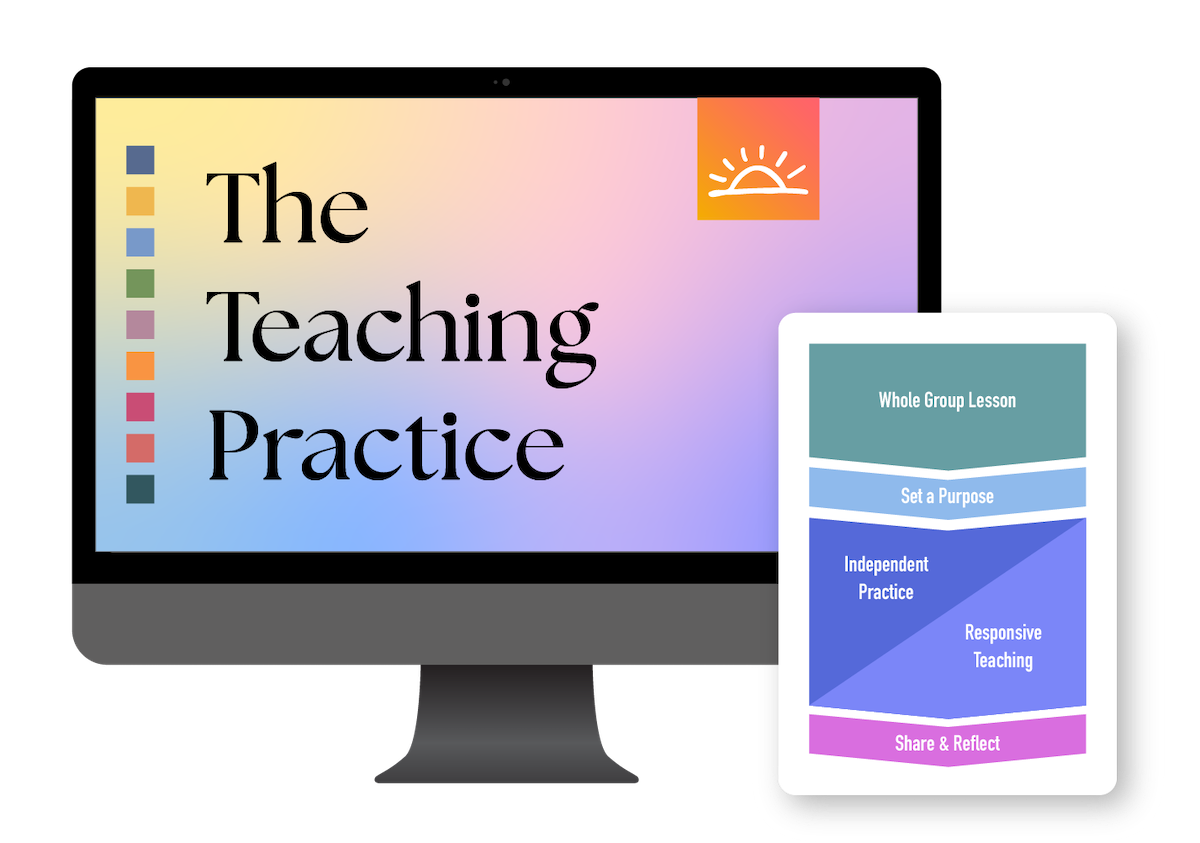
If you’re ready to strengthen these skills:

© 2026 Teach Daily
This site is protected by reCAPTCHA and the Google Privacy Policy and Terms of Service apply.