

By Gail Boushey Published: 6/28/2026 Updated: 6/28/2026
Every teacher who has ever watched a student work through a decodable text knows this: the curriculum alone is not enough. What surrounds that instruction, the environment, the relationships, the routines, determines whether it reaches the student in front of you.
That is what The Teaching Practice is designed to address.
The Teaching Practice is a video-based professional learning system built around eight high-impact teaching practices drawn from John Hattie's Visible Learning research and documented in Prepared Classroom (Boushey & Behne, 2024, Routledge). Hattie's synthesis of over 800 meta-analyses, the largest study of educational research ever conducted, representing the learning of over 300 million students, identified the practices that most influence student achievement. Every one of them sits at the heart of The Teaching Practice.
Here is how each of the eight practices connects to what Science of Reading instruction requires.
Hattie Effect Size: d = 0.72
When students feel known and safe, they take risks. They ask questions. They keep trying when decoding is hard. They stay in the work even when it is demanding.
Science of Reading Connection: Positive relationships build the motivation and engagement that reading development requires. A student who trusts their teacher is a student who will ask for help decoding an unfamiliar word, try again after a miscue, and persist through the hard work of becoming a reader. Hattie's research confirms what teachers have always known: relationship is the foundation, and everything else is built on top of it.
Hattie Effect Size: d = 0.53 (classroom cohesion)
A purposeful environment is an instructional environment. Sound walls, anchor charts, word walls, organized materials within reach, these are teaching tools, placed where students can use them independently.
Science of Reading Connection: A well-designed classroom environment supports orthographic mapping, vocabulary development, and concept retention. When the environment reduces cognitive load and puts learning supports in students' hands, the teacher is freed to teach. An organized, print-rich classroom amplifies every literacy lesson that happens inside it.
Hattie Effect Size: d = 0.62 (classroom behavioral practices)
When students know exactly what to expect, how to transition, where materials are, and what independent practice looks like, they can devote their mental energy to the learning itself.
Science of Reading Connection: Predictability and structure create the conditions for focused literacy instruction. When routines are established and students move through them with confidence, the teacher gains the time and space to lead phonics instruction, guided reading, and small group work without interruption. Strong routines are the infrastructure that holds rigorous instruction in place.
Hattie Effect Size: d = 0.79 (deliberate practice); d = 0.71 (spaced practice)
Students need meaningful opportunities to work independently and with each other, tasks that are purposeful, connected to what has been explicitly taught, and designed to extend and reinforce that learning.
Science of Reading Connection: Science of Reading emphasizes deliberate practice. Whether students are working through decoding practice, vocabulary activities, or fluency reading, independent work is where explicit instruction takes hold. Collaborative tasks give students the opportunity to talk through texts, explain strategies to one another, and deepen comprehension. The Teaching Practice helps teachers design that time with precision and intention.
Hattie Effect Size: d = 0.75 (teacher clarity); d = 0.59 (direct instruction)
Students learn from lessons that are clear and focused. Brief, purposeful instruction leaves time for what comes after: guided practice, conferring, and application.
Science of Reading Connection: Structured literacy depends on direct, focused teaching. A well-designed lesson teaches one thing clearly, models it explicitly, and releases students to practice it. The Lesson Framework course in The Teaching Practice develops exactly this skill, the ability to teach something important briefly and well, creating space for the responsive teaching that follows.
Hattie Effect Size: d = 0.70 (feedback)
Checking in with students one-on-one and in small groups is where instruction becomes personal. It is where a teacher listens, responds, and meets each student exactly where they are.
Science of Reading Connection: Conferring is where Science of Reading comes to life for individual students. When a teacher pulls alongside a reader, listens to them decode, coaches through a miscue, or guides a comprehension conversation, that is responsive instruction in its most precise form. The Art of Responsive Conferring teaches teachers how to make every one of those moments count.
Hattie Effect Size: d = 0.90 (formative evaluation); d = 1.44 (student self-assessment)
Data that guides instruction and helps students understand their own growth sits among the highest-impact practices in all of Hattie's research. Progress monitoring is a cornerstone of what works.
Science of Reading Connection: Ongoing assessment and responsive instruction are central to Science of Reading-aligned teaching. Fluency checks, phonics screeners, comprehension conversations, all of it helps teachers adjust instruction and helps students see their own progress. The Teaching Practice connects progress monitoring to the daily flow of teaching, as an integral part of how the classroom runs rather than something added on top of it.
Hattie Effect Size: d = 0.69 (metacognitive strategies)
Transfer is the goal. When students apply what they have learned across subjects, settings, and tasks, when they use a decoding strategy in a new text, draw on vocabulary in their writing, or explain a concept to a peer, the learning has taken hold.
Science of Reading Connection: Reading skills are tools for meaning-making, and meaningful application is what makes them last. Hattie's research on metacognitive strategies, students thinking about and directing their own learning, confirms that when students take ownership of how they apply a skill, achievement rises significantly. Designing Meaningful Independent Practice helps teachers create the conditions where students move from practicing a skill to using it with independence and purpose.
The Teaching Practice is a professional learning system, not a reading curriculum. It develops the teaching practices that make any curriculum work.
When routines are strong, students work independently and the teacher has time to confer. When lessons are brief and focused, there is space for practice and small-group instruction every period. When trust is built, students engage with the demanding, rewarding work of learning to read.
Every one of these practices sits above Hattie's hinge point of 0.40, the threshold at which research confirms an intervention has meaningful impact on student achievement. Together, they create a classroom where Science of Reading instruction can reach every student.
The best curriculum works best with a skilled, prepared teacher on the other side of it. The Teaching Practice helps the teacher build those skills.
Explore The Teaching Practice at teachdaily.com/membership.
References
Boushey, G., & Moser, J. (2006). The Daily 5: Fostering Literacy Independence in the Elementary Grades (1st ed.). Stenhouse.
Boushey, G., & Moser, J. (2009). The CAFE Book: Engaging All Students in Daily Literacy Assessment and Instruction (1st ed.). Stenhouse.
Boushey, G., & Moser, J. (2014). The Daily 5: Fostering Literacy Independence in the Elementary Grades (2nd ed.). Stenhouse.
Boushey, G., & Behne, A. (2019). The CAFE Book: Engaging All Students in Daily Literacy Assessment and Instruction (Expanded 2nd ed.). Stenhouse.
Boushey, G., & Behne, A. (2024). Prepared Classroom: Ready to Teach, Ready to Learn (1st ed.). Routledge. https://doi.org/10.4324/9781032682846
Hattie, J. (2009). Visible Learning: A synthesis of over 800 meta-analyses relating to achievement. Routledge.
Hattie, J. (2023). Visible Learning: The Sequel. A synthesis of over 2,100 meta-analyses relating to achievement. Routledge.
Quick lessons you can teach in 10 mins/day so students take responsibility for their learning and rely on you less.
Get the LessonsTeaching is complex. And the challenges teachers are navigating right now are real.
Strong programs, new mandates, and growing expectations have changed what classrooms look like. Yet the foundations of effective teaching remain the same.
Students need to practice independently.
Teachers need time to respond to learners.
Learning needs structure to carry forward.
These are skills that can be built.
At Teach Daily, we focus on the structure of teaching. How lessons, independent practice, and responsive conferring work together across a day so learning lasts.
Choose your next move:
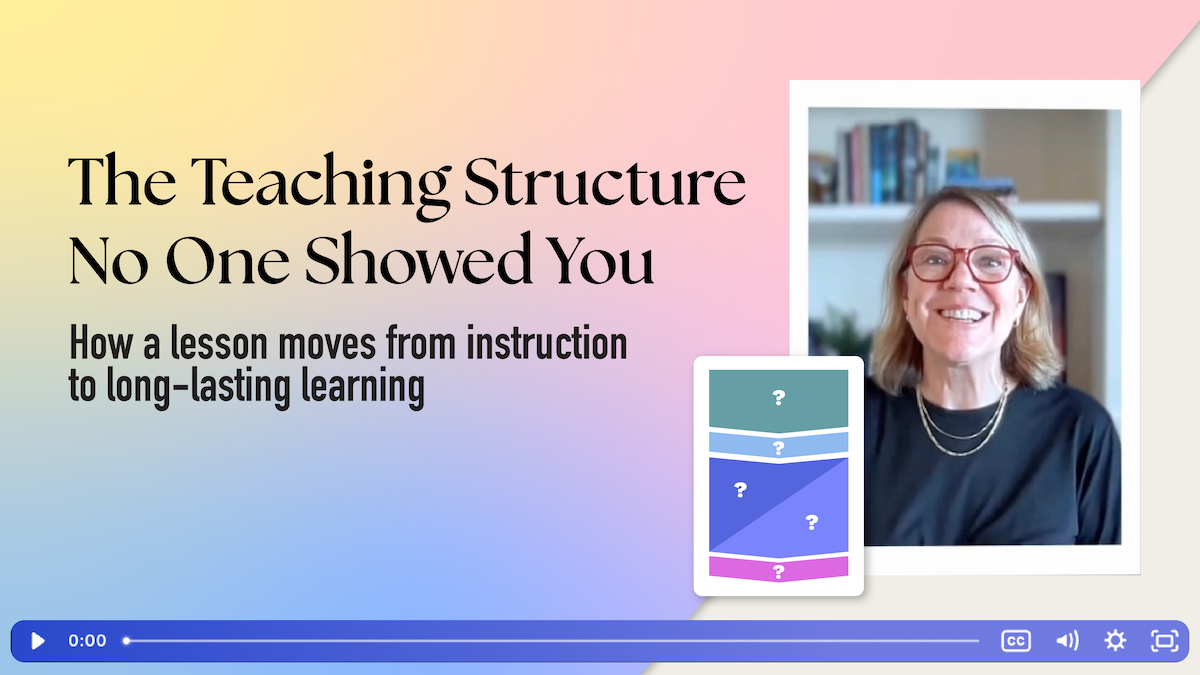
If you want to see the structure clearly, watch this training:
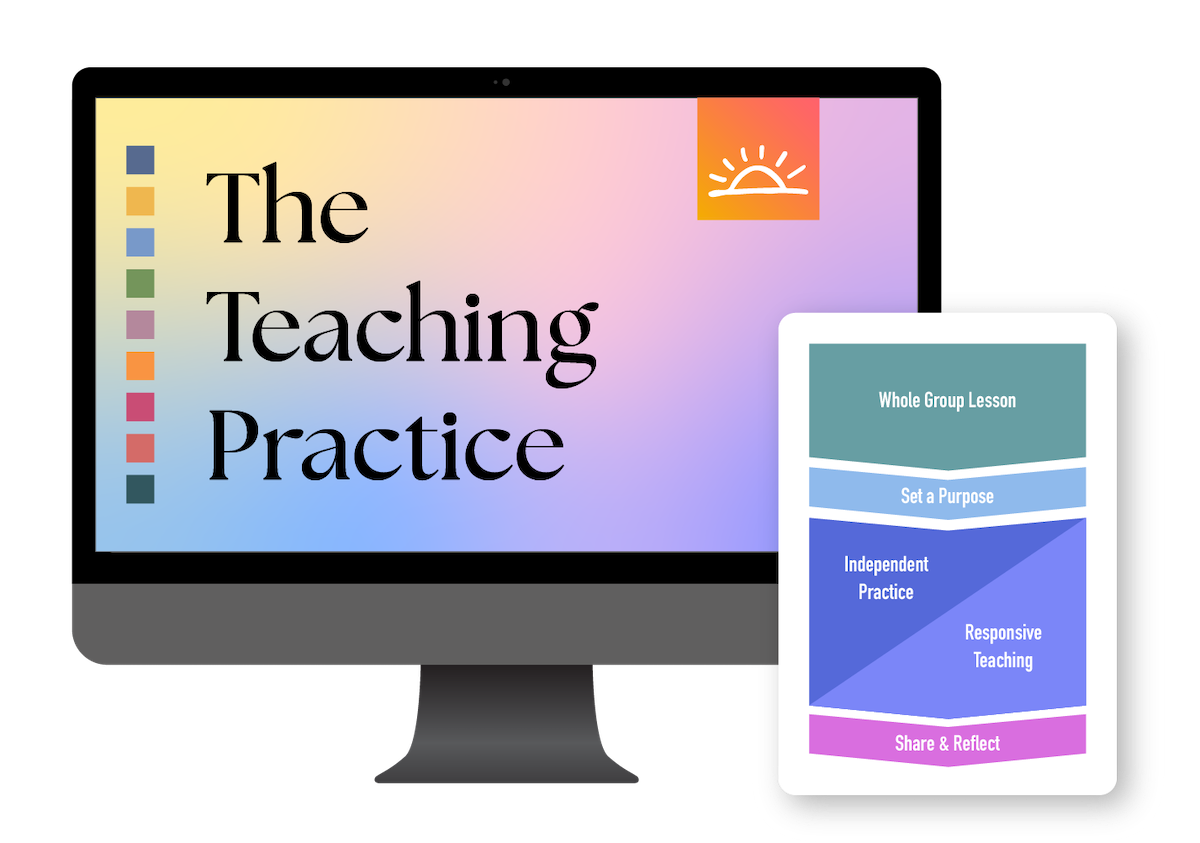
If you’re ready to strengthen these skills:

© 2026 Teach Daily
This site is protected by reCAPTCHA and the Google Privacy Policy and Terms of Service apply.