

By Gail Boushey Published: 4/29/2026 Updated: 4/29/2026
In 2010, I went principal shopping.
I know that sounds unusual, but I knew I had to do it. If I was going to step out of the classroom and into a coaching role, I was going to do it with someone I believed in. Someone who saw the potential and was ready to build.
I found him at Meridian Elementary in Washington State. A suburban K-6 school with an outstanding staff and a principal who wanted a literacy coach at a time when coaching was so new to the district that the role didn't exist yet. We would build it together. He trusted me. I trusted him. We both believed we could figure it out.
And we did. But first, I had to ask myself a simple, yet complex question: what am I coaching on?
I walked into that building full of knowledge and belief and readiness. And I realized almost immediately that nobody had answered the most basic question. Not me. Not my principal. Not the district. Am I coaching on literacy? On assessment? Program implementation? Behavior? I could have pointed in a dozen directions and found something worth working on.
But that wasn't the question. The question underneath all of it was simpler and harder at the same time:
The research existed. But finding the answer meant living inside classrooms, watching what worked, bringing research to teachers and watching how it was implemented, and slowly learning to name what I was seeing.
I know now what I was looking for then. Nine practices. Research-grounded. Named. Present in every classroom where learning was happening, and reachable in every classroom where it wasn't yet.
I wish I'd had that answer in 2010. I wish every coach and every principal walking into a school for the first time had it.
Most schools have a lot. Programs. Pacing guides. Evaluation frameworks. Maybe an instructional coach. PD days at the start of the year. People who care deeply about every student in the building.
What most schools don't have is a shared answer to that question: what does effective teaching look like here?
Not in the handbook. Not in the rubric language. Not as a philosophy statement on the wall. As a living, working answer. Something every teacher in the building, new and veteran, struggling and thriving, could point to and say: that. That is what we are working toward.
Without that, schools accumulate. Programs arrive and get implemented with varying results. Evaluations happen and feedback lands in a vacuum. New teachers get oriented to the schedule and the copy machine, but not to the craft. Mentor programs form with the best intentions and then struggle because the mentor and the new teacher are reaching for different words to describe the same thing.
The evaluation measures the foundations of teaching. The program fills the lesson. And somewhere in between, the teacher is on their own for everything that matters most. How to read a room. How to build independence in 25 students. How to sit beside one child and know exactly what to teach next.
That is the question to answer. And it has an answer.
Think about what changes when a school has a clear, shared answer to the question: what does effective teaching look like here?
A new teacher arrives. Instead of being handed a handbook and a roster, they are oriented to the practices the school is built on. They don't just learn how things work here. They learn what teaching looks like here. They step into a culture that already knows what it believes.
A mentor sits down with that new teacher. They are not improvising from experience and intuition alone. They are working from the same map. When the mentor models a lesson, the new teacher knows what to look for. When they debrief, they have language for what they saw. Growth has direction. The conversation is embedded in the shared knowledge.
A principal walks into a classroom with that shared language already in place. The observation isn't just a measurement. The feedback names something specific. The teacher knows exactly what they are talking about. The conference ends and the path forward is clear. Everyone is already speaking the same language.
A veteran teacher, twenty years in, finds there is still a next level. Because the craft of teaching is never finished. And now there is a named, specific place to go deeper and continue to learn.
The whole school moves in the same direction. Each teacher starts where they are, moving at the pace that fits their practice toward the same picture and practices of what effective teaching is.
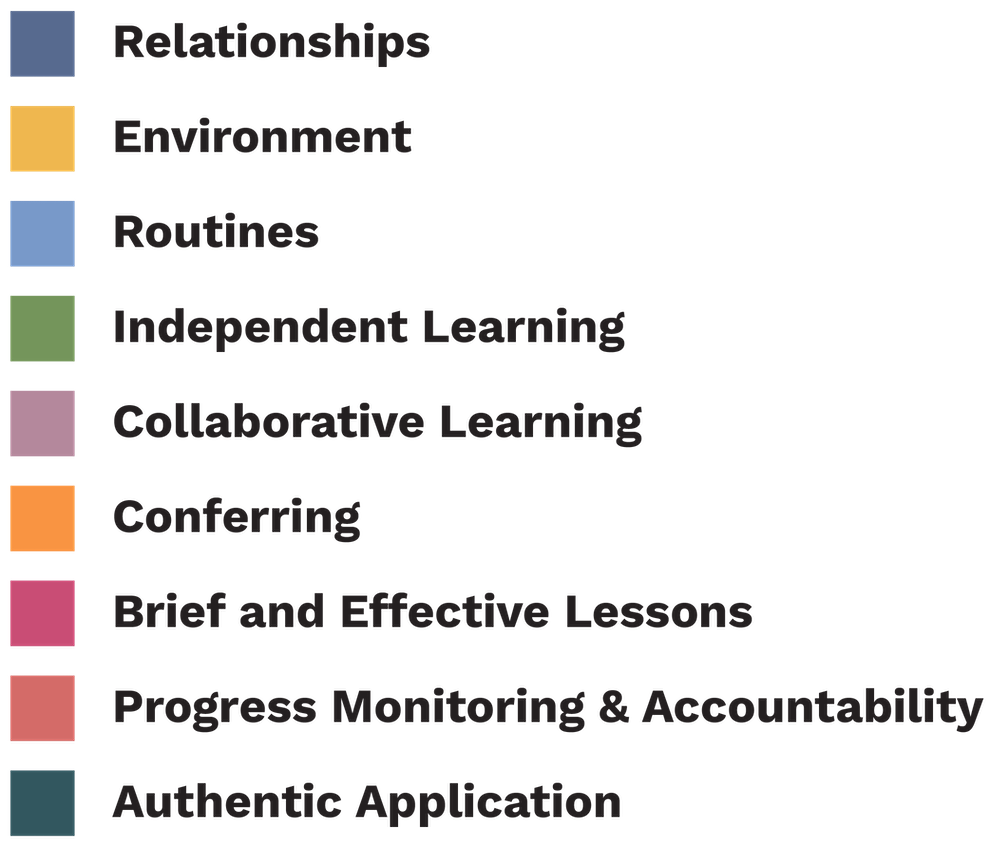
There are nine high-leverage practices at the foundation of effective teaching. They appear in every evaluation framework, every observation rubric, every domain a principal is trained to assess. Research-grounded. Named. Learnable at any stage of a career.
Building relationships. Creating learning-ready environments. Teaching clear routines. Developing student independence. Facilitating collaboration. Conferring responsively. Delivering brief, focused lessons. Monitoring progress.
John Hattie's synthesis of over 2,100 meta-analyses found that the practices with the highest impact on student outcomes, feedback with an effect size of 0.70, teacher-student relationships at 0.72, formative evaluation at 0.68, are all here. These are not aspirational ideals. They are learnable skills. And they transfer across every program, every curriculum, every grade level.
When a new program arrives, teachers who have built these foundations implement it better. When a veteran deepens their conferring practice, every student they sit beside learns more. When a new teacher learns to build genuine student independence, their whole block opens up.
The practices don't expire. They compound. Every year a teacher builds them, they carry them forward. Into the next program. The next classroom. The next school year.
In 2010, I didn't know this picture existed. I was looking for it without knowing what I was looking for.
Here is the picture I can see now:
And on TeachDaily.com, the video lesson for exactly that practice is already waiting.
You don't have to wait that long.
The Teaching Practice on TeachDaily.com gives every teacher in your school access to all nine foundations through video, articles, and classroom-ready lessons they can work through at their own pace, starting exactly where they are.
For a new teacher, it is the pathway their mentor points them to from day one. For a veteran, it is where the next level of their craft lives. For a mentor, it is the shared map that makes every conversation more specific. For a principal, it is what the post-observation conference leads to: something concrete, named, and ready.
For a school, it is the answer to the question: What does effective teaching look like here?
Ask yourself: if every teacher in my building were working on these, what would my school look like in three years?
That school is buildable. The path is there. The practices are named. The language exists.
You just have to decide to make it the language of your school.
Quick lessons you can teach in 10 mins/day so students take responsibility for their learning and rely on you less.
Get the LessonsTeaching is complex. And the challenges teachers are navigating right now are real.
Strong programs, new mandates, and growing expectations have changed what classrooms look like. Yet the foundations of effective teaching remain the same.
Students need to practice independently.
Teachers need time to respond to learners.
Learning needs structure to carry forward.
These are skills that can be built.
At Teach Daily, we focus on the structure of teaching. How lessons, independent practice, and responsive conferring work together across a day so learning lasts.
Choose your next move:
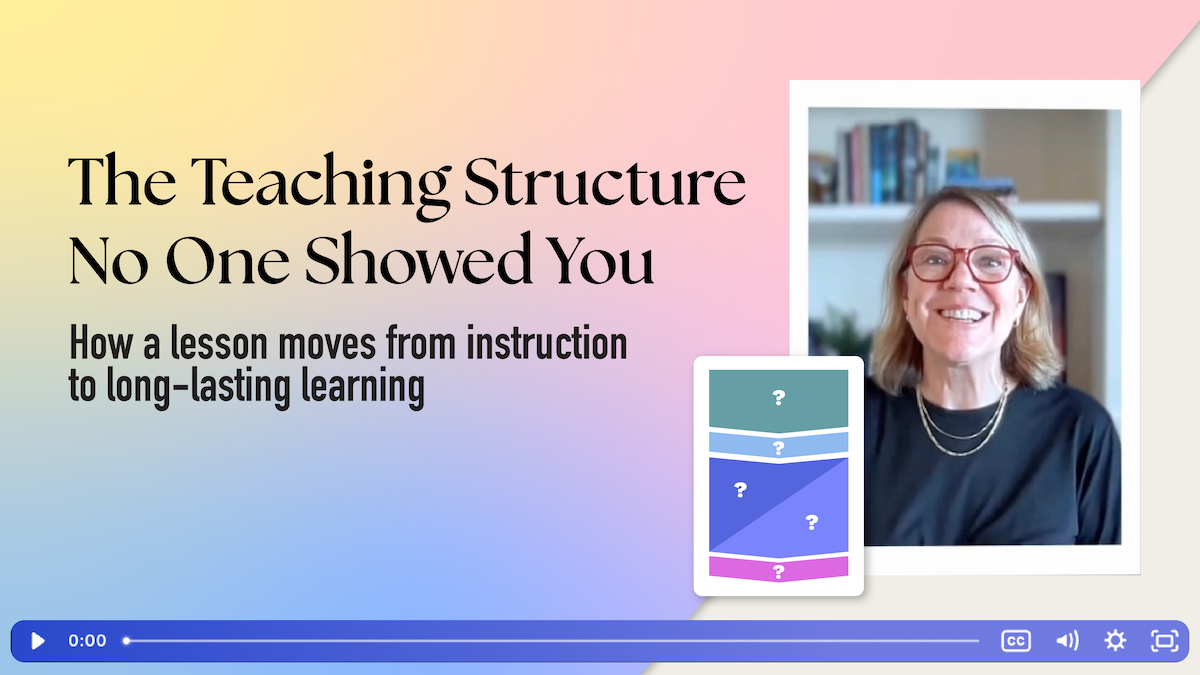
If you want to see the structure clearly, watch this training:
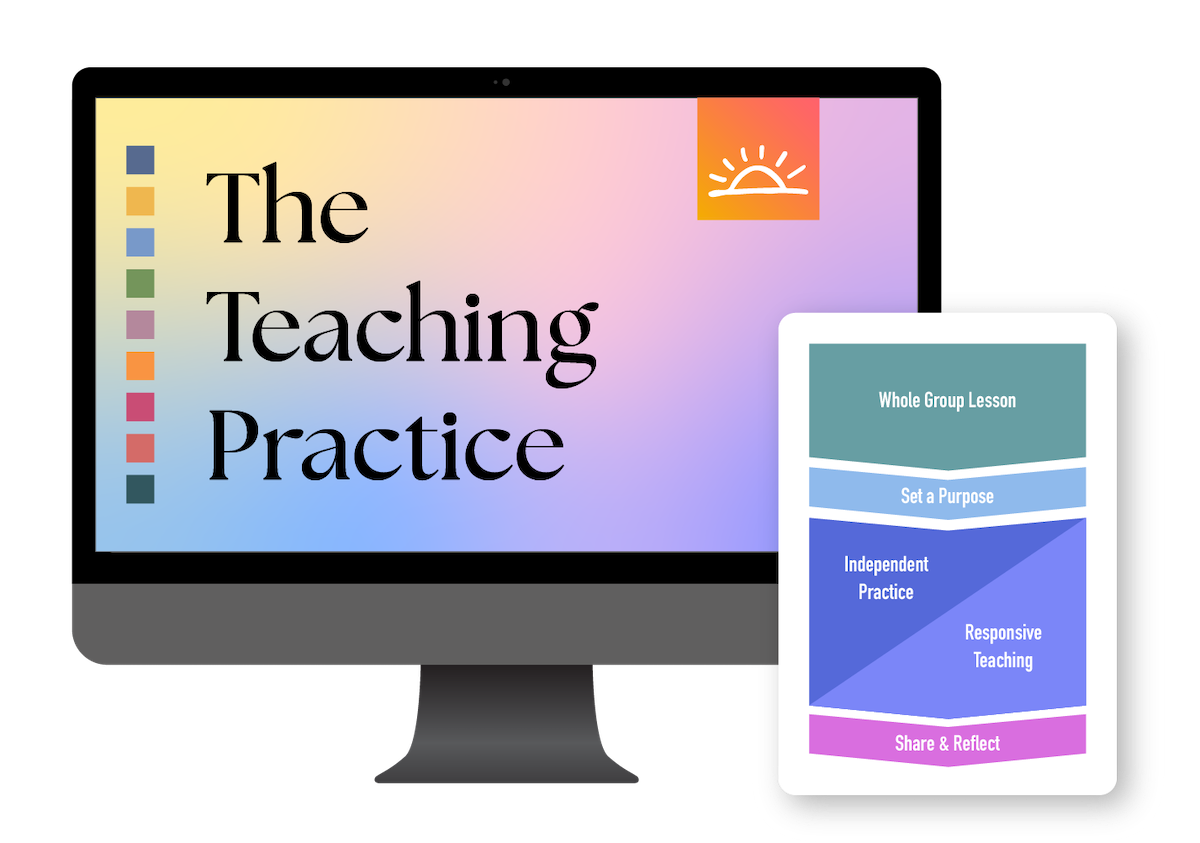
If you’re ready to strengthen these skills:

© 2026 Teach Daily
This site is protected by reCAPTCHA and the Google Privacy Policy and Terms of Service apply.