
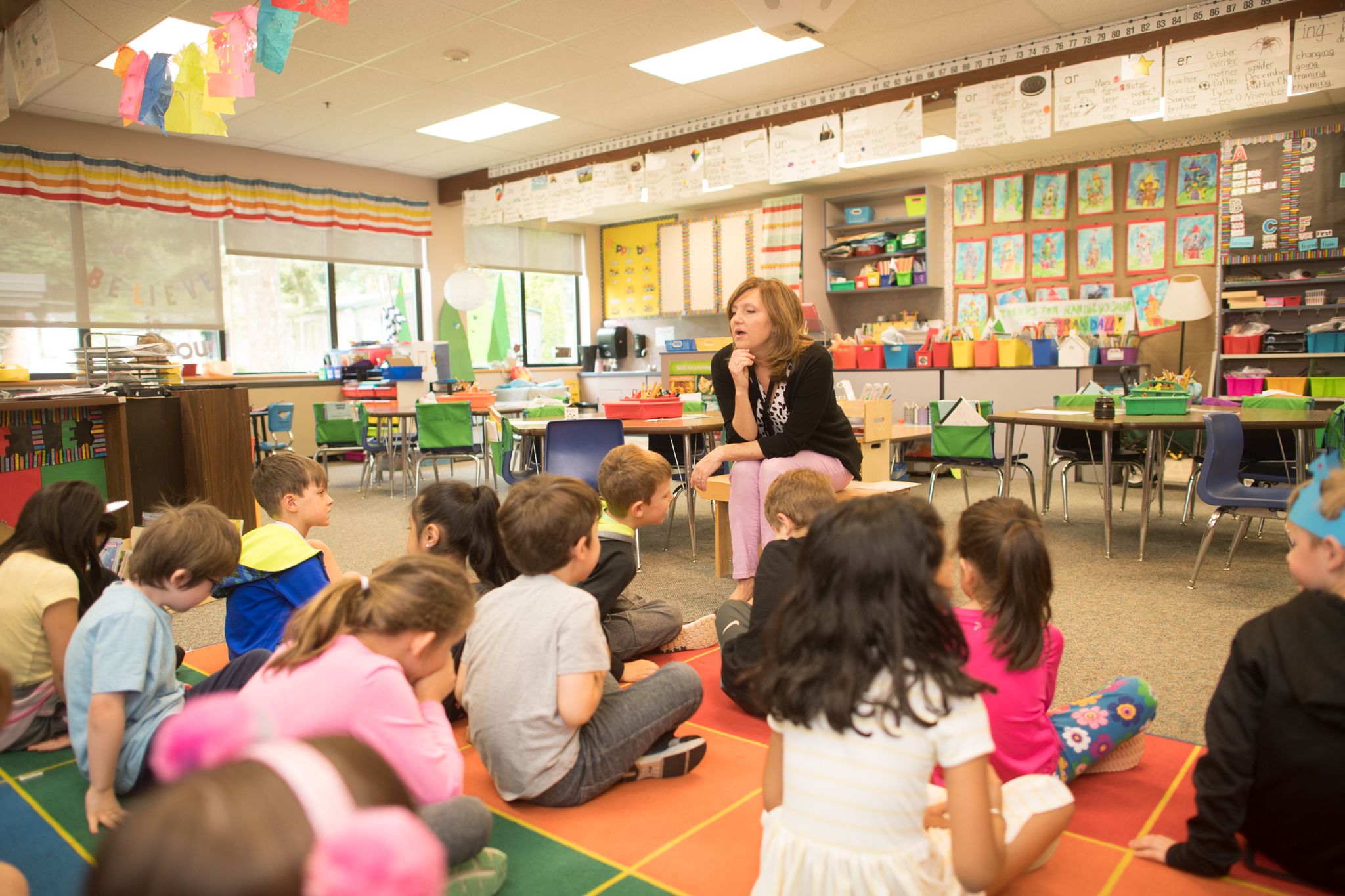
Over the past few weeks, we've been naming the four parts of a teaching structure. This week, we're turning to what happens while students practice, and how you support them right there in the moment.
Now picture this: You've taught the lesson. Students have set their purpose. They're working. The room hums with focused energy, pencils moving, pages turning, students leaning into their tasks. You can feel learning taking shape.
And then you start to notice.
The child who just stopped writing and looks uncertain, the trio ready for a new challenge, the one working carefully but stuck on step two.
Maybe you:
- Walk the room, gathering evidence of how students are using the strategy you taught.
- Sit beside one student to guide them through a tricky part.
- Offer an extension to those ready to stretch deeper.
- Pull a quick small group to reteach or refine an idea.
This is called responsive teaching. You're observing what's happening. You're responding to what you see. You're teaching based on what students actually need in this moment, based on what's unfolding right in front of you.
This matters because research shows a gap between what students learn in a lesson and what they can actually do on their own (Duke & Cartwright, 2021). Students need support while they're practicing to bridge that gap. When you observe and respond in real time, students get feedback while they are in the work (Hattie, 2023). That's when learning transfers from the lesson taught, to what the students can do independently.
This week
While students work, pause and notice your responsive teaching:
- Are students working independently?
- Which students are successfully applying today's learning?
- Who might need to ask a question, or need a scaffold to stay on track?
- How are you adjusting your support as you move through the room?
You may already be doing more of this than you realize. And noticing it is where growth begins.
For three weeks now, we’ve gone through the importance of:
- brief lessons
- students setting their purpose for learning
- how you support students while they practice
Next week, I’ll show you how these pieces fit together with a map of teaching and learning as a guide.
And I’ll share a custom path we’ve created to help you strengthen what is already working in your classroom and build a clear plan for what to focus on next.
You don’t have to assemble it on your own.
We’ve been building the plan and can’t wait to share it with you.
See you next week,
Gail
References
Duke, N. K., & Cartwright, K. B. (2021). The science of reading progresses: Communicating advances beyond the simple view of reading. Reading Research Quarterly, 56(S1), S25–S44.
Hattie, J. (2023). Visible Learning: The sequel. Routledge.
This article might be missing links that were included at the time of publication.